

Lights! Camera! Action!
/Reflections on the video shoot of the Eight Symmetries and the Symmetries Linked Form
By Kim Husband
Preparation
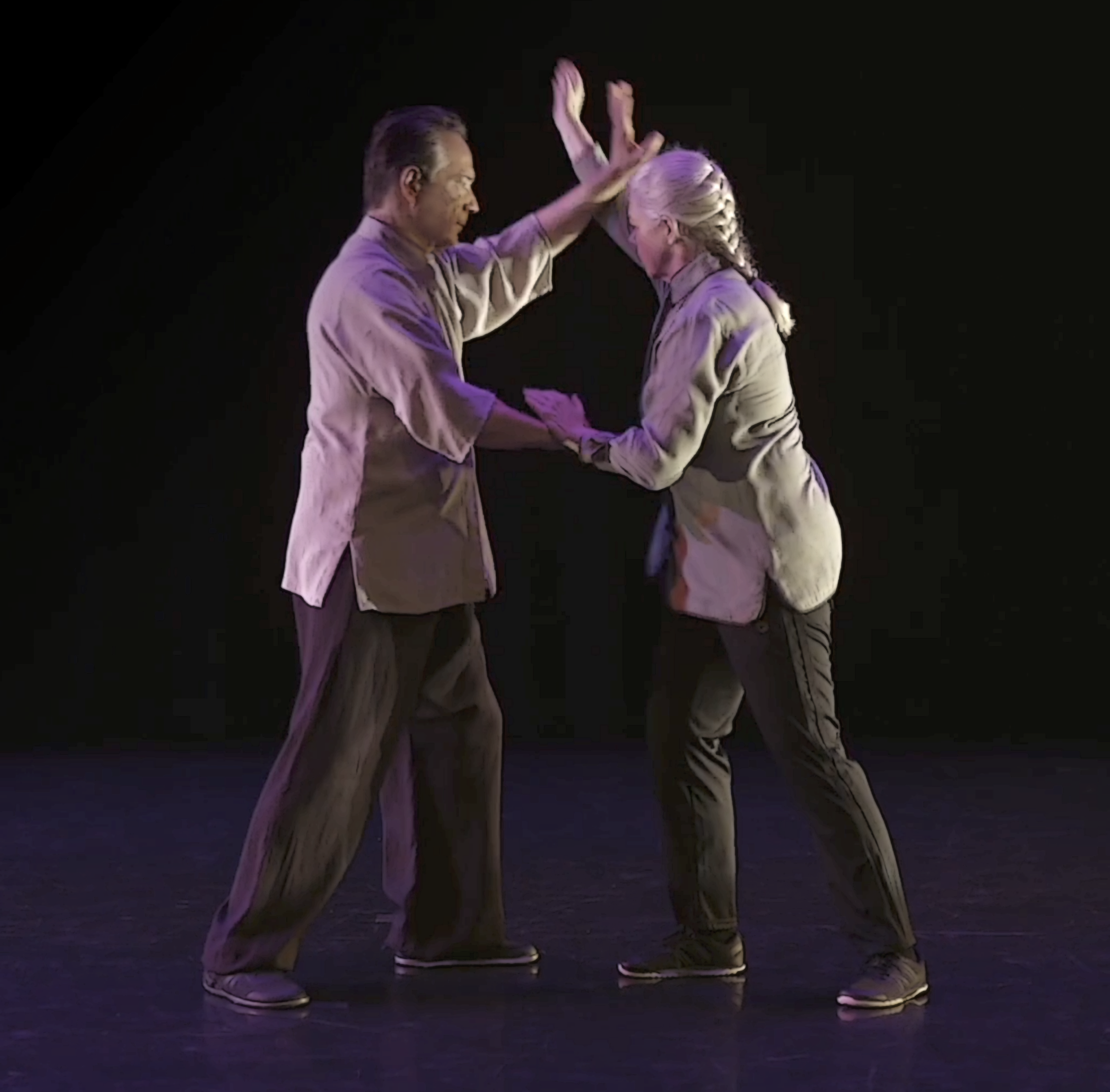
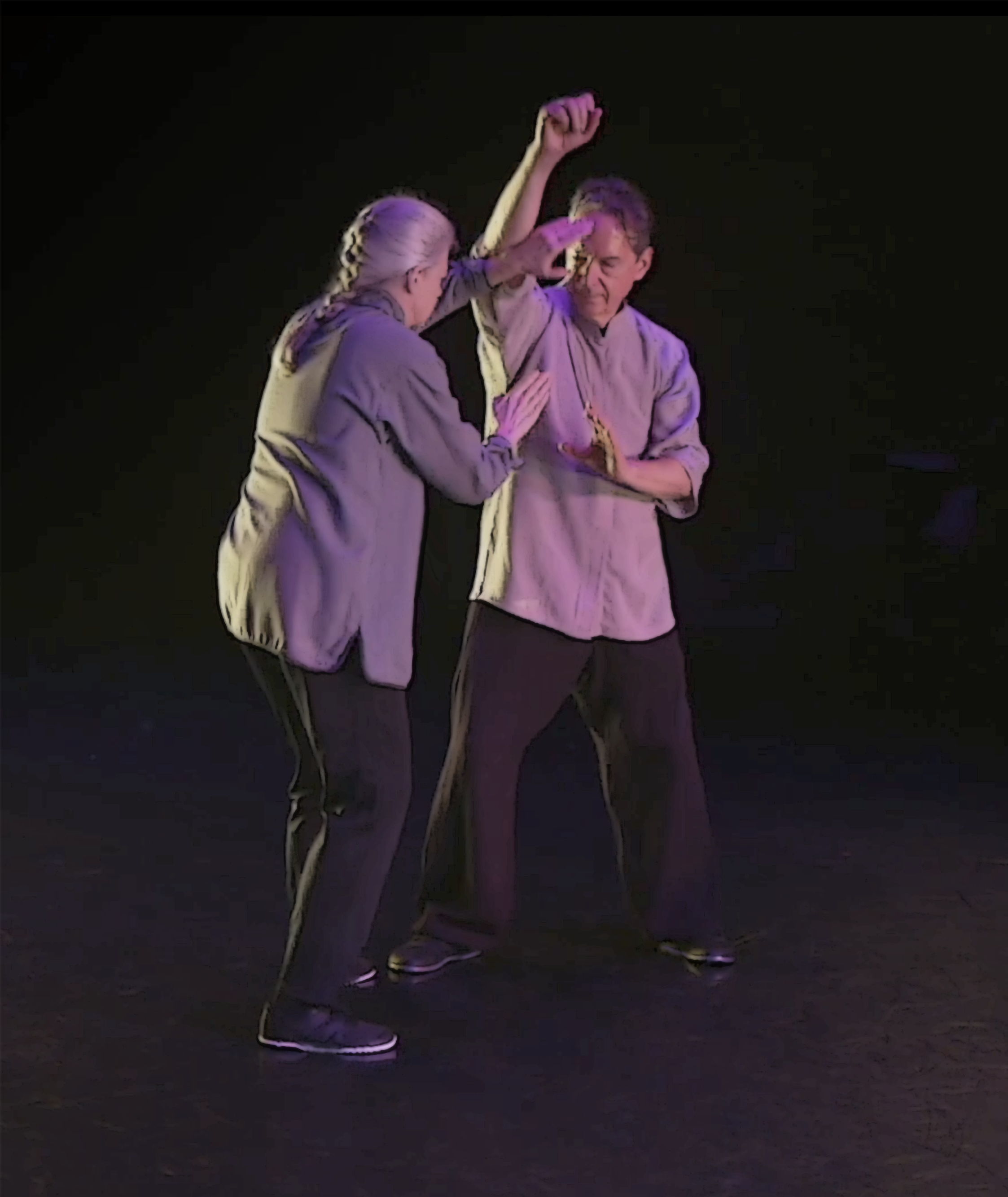
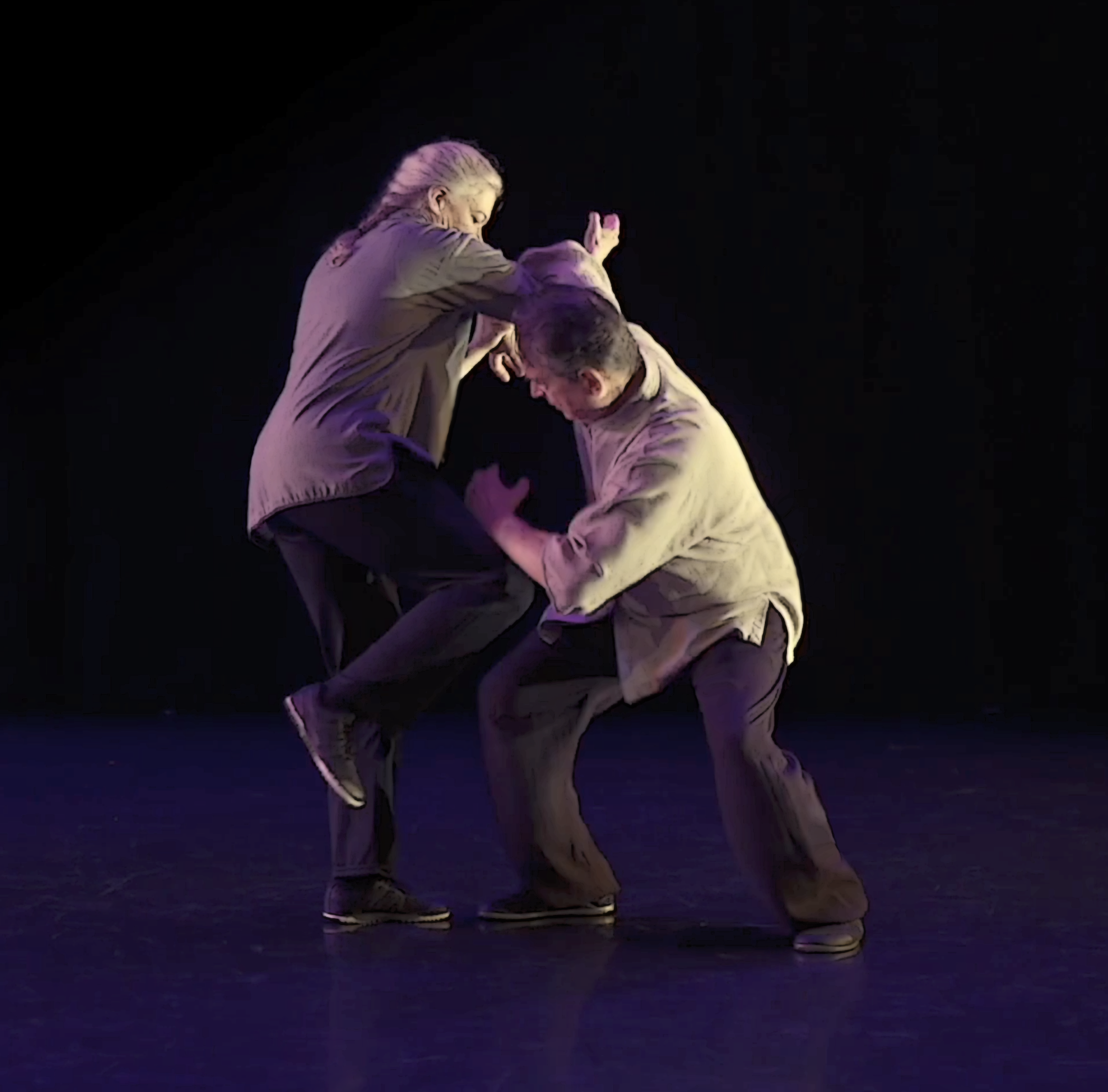
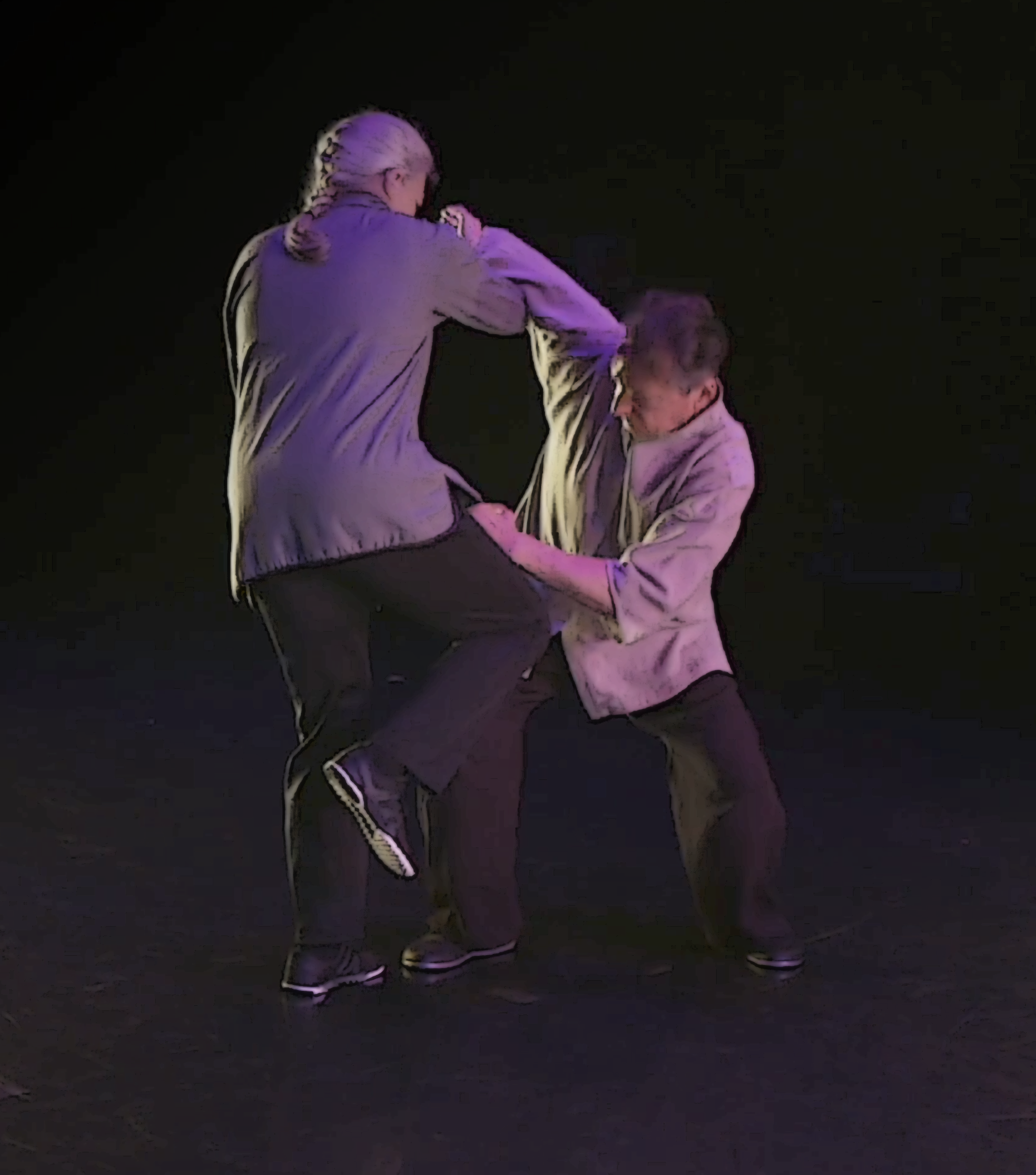
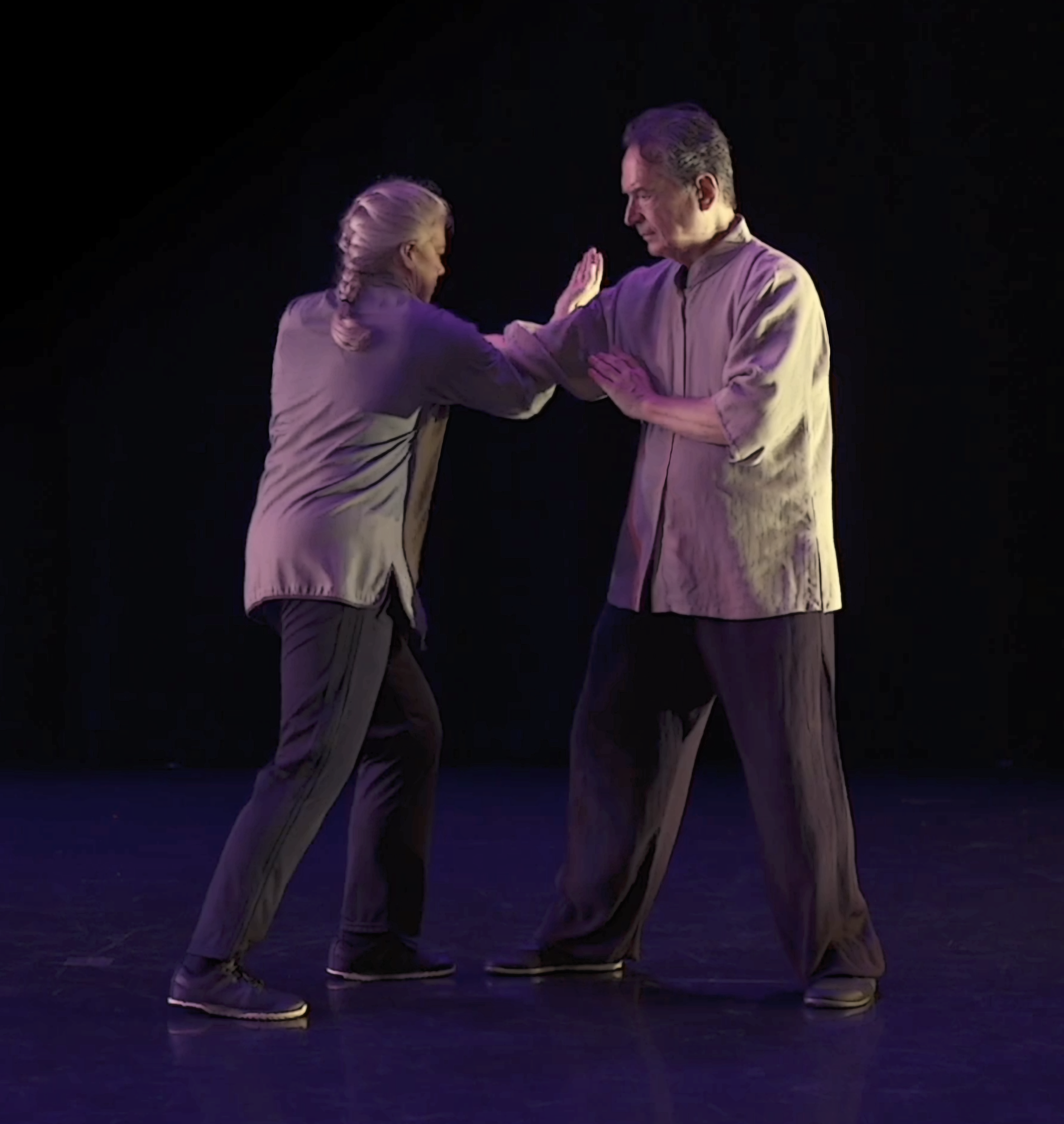
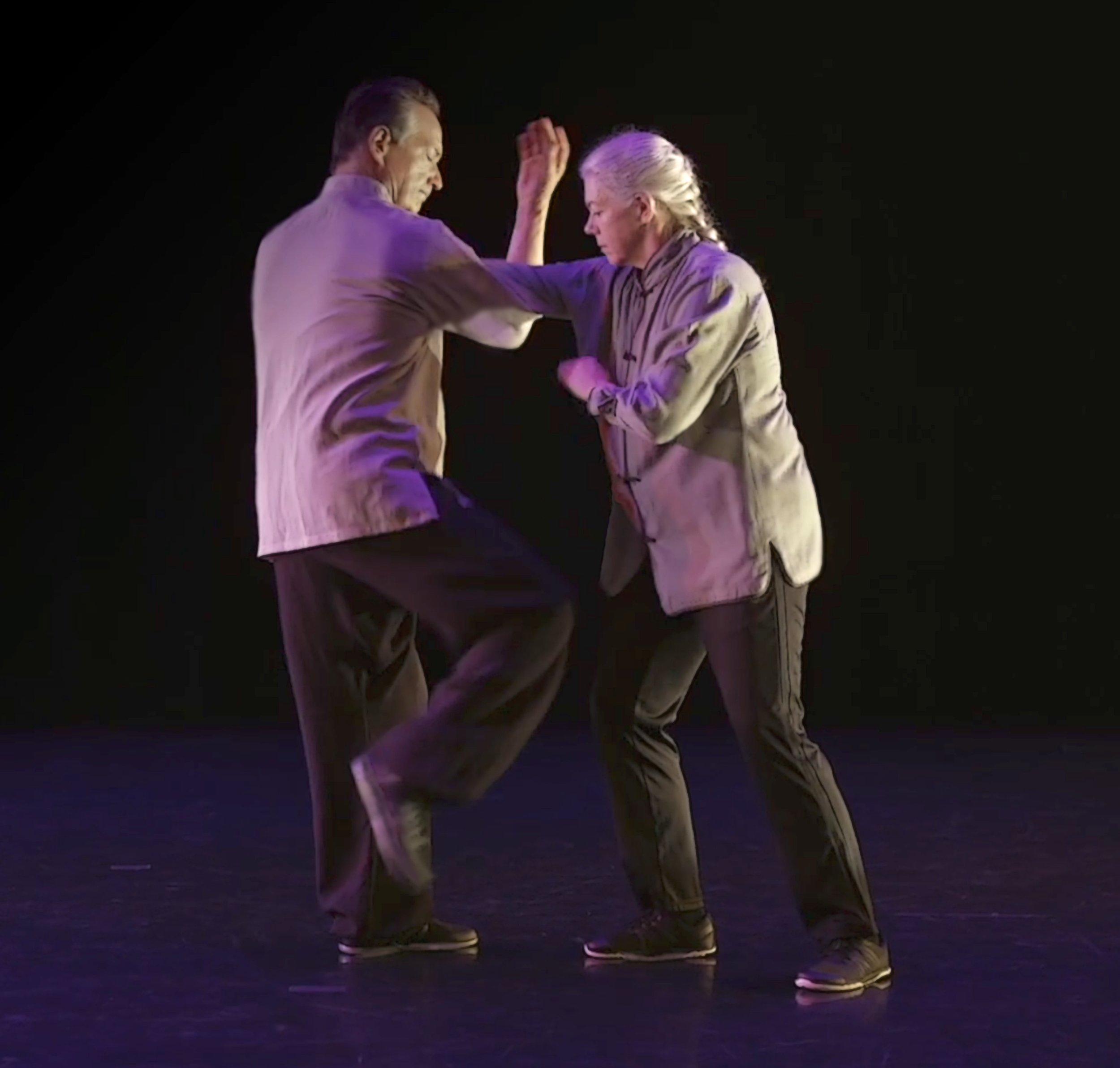
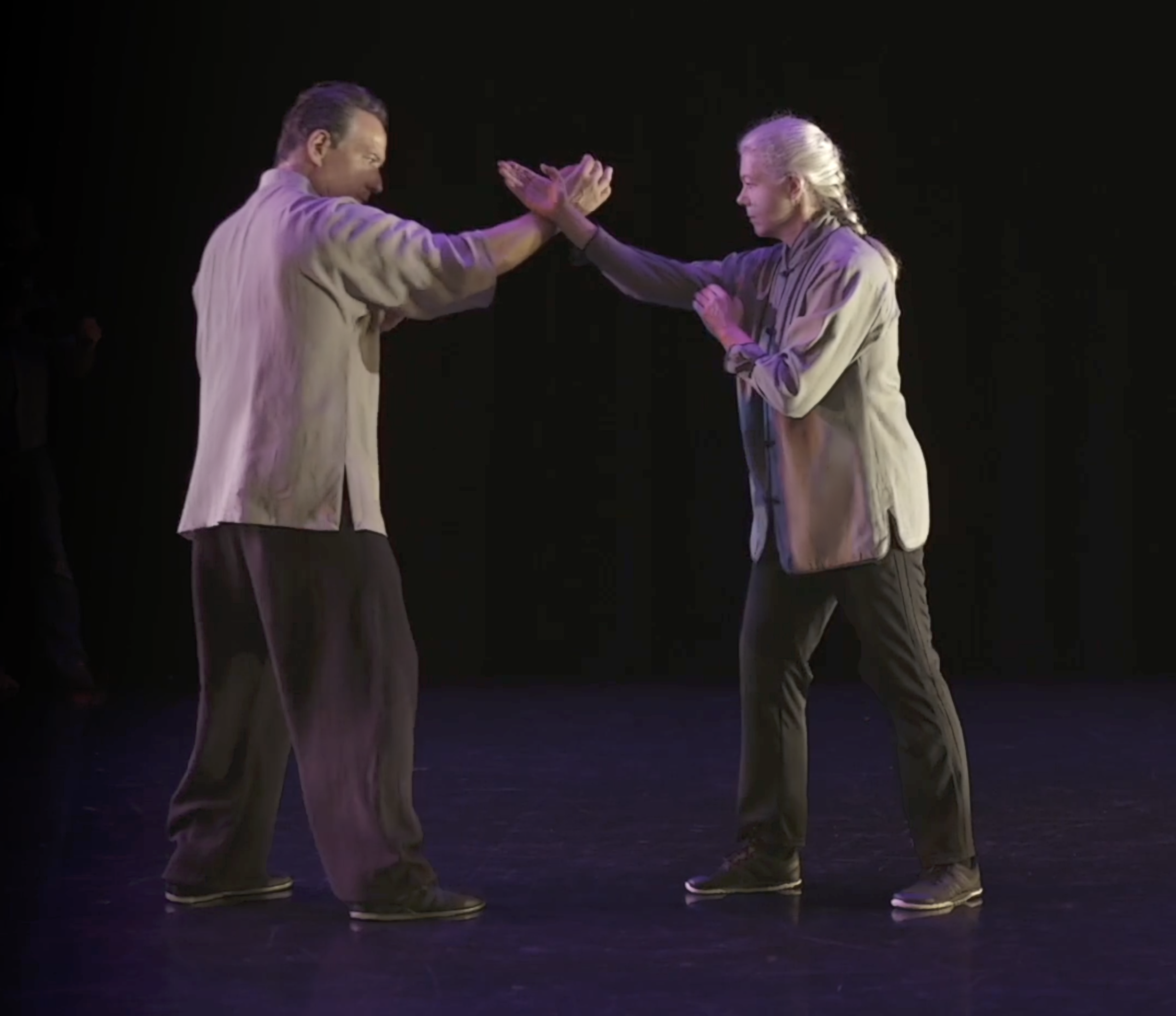
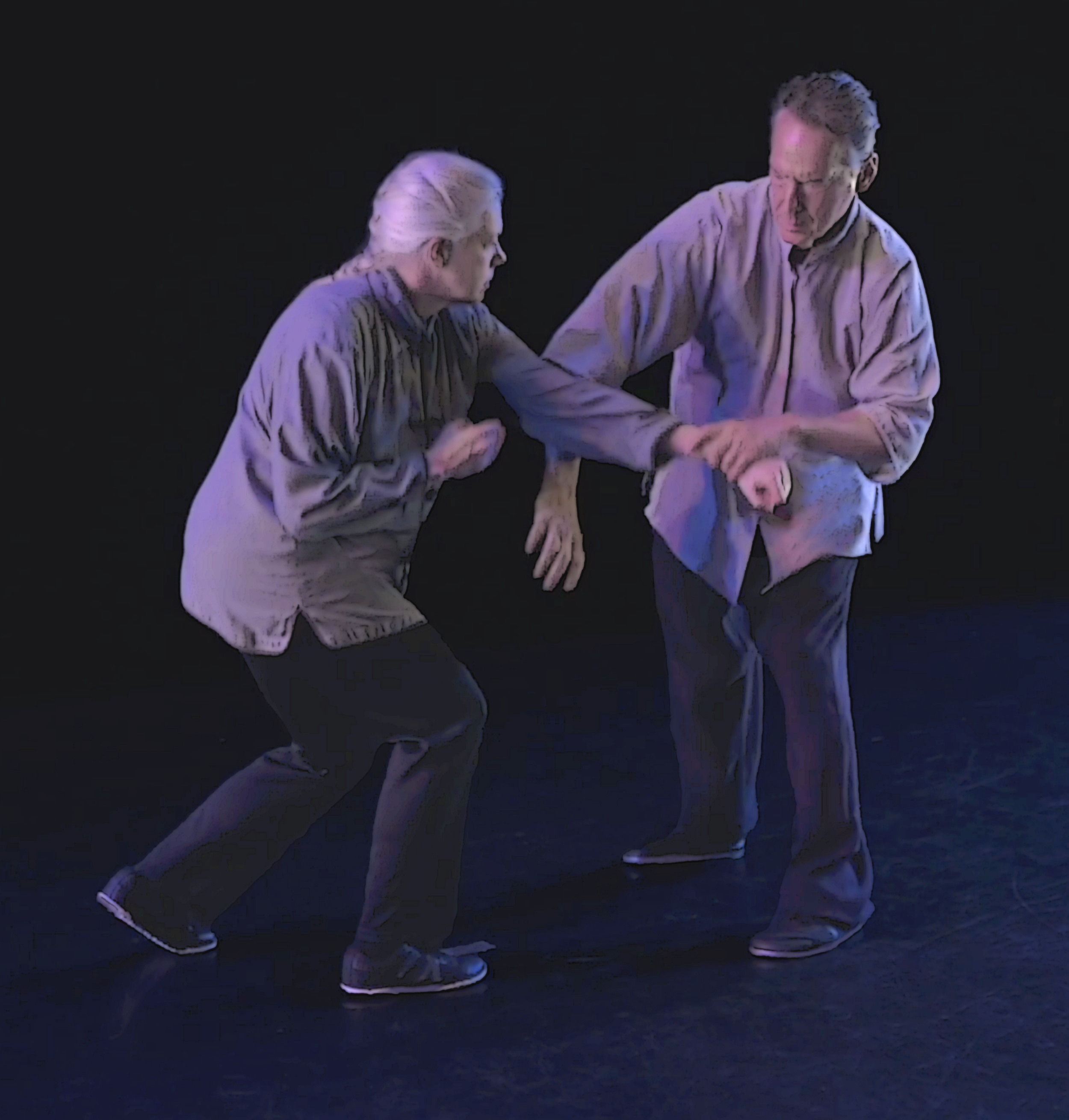
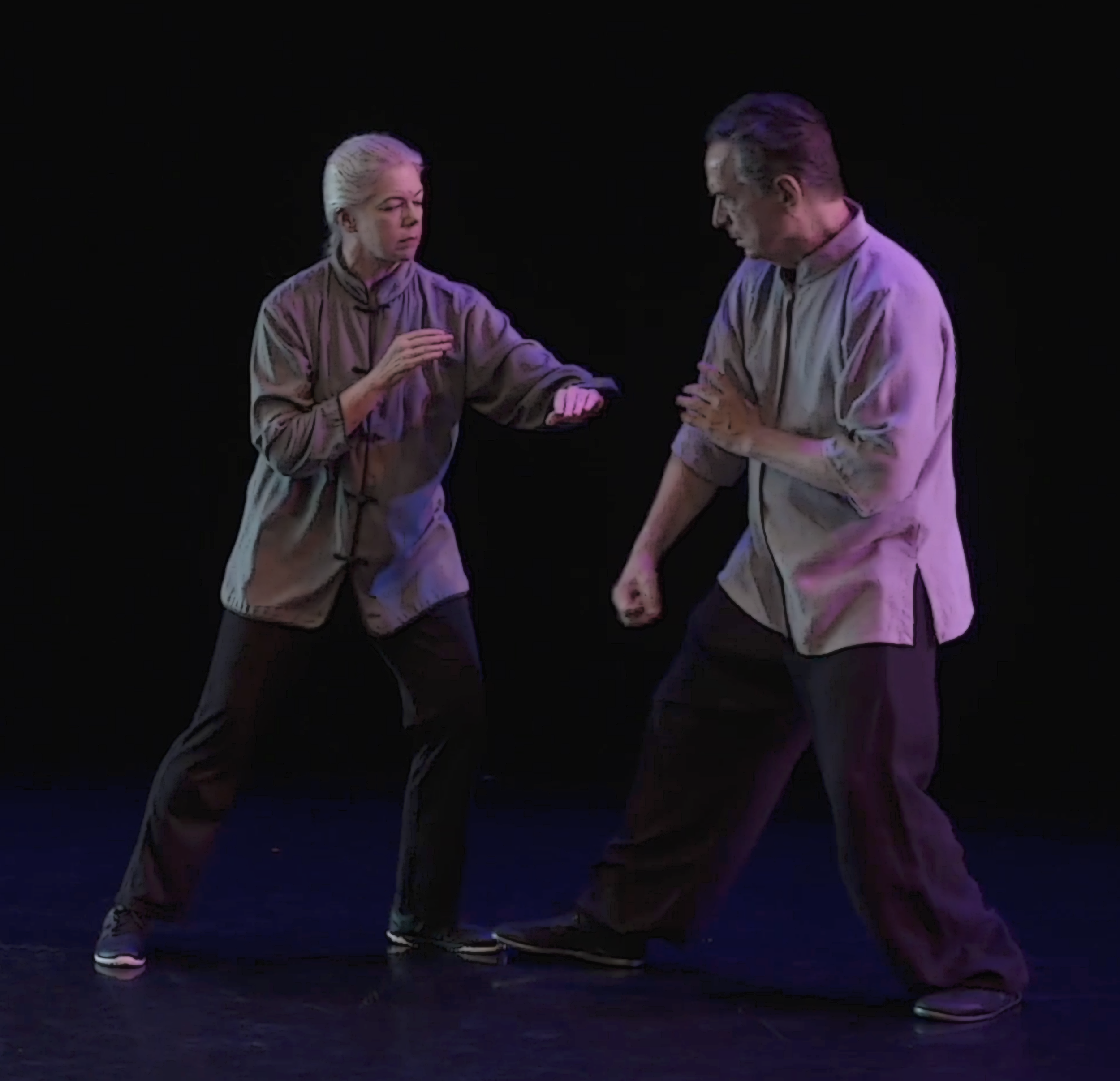
On July 31, Sifu Paul and I spent the day at the Barbara Barker Center for Dance to shoot video of the Eight Symmetries and the Linked Form, which shows a self-defense application for all of the postures in the Solo Form in the order in which they appear. Sifu had wanted for some time to produce professional-quality videos for both display and instructional purposes, so we had been practicing those forms with that end in mind. Focused preparation began in earnest earlier this year when Sifu connected with videographer Darren Johnson of Northern Dawn Media, who specializes in filming dance. Accustomed to capturing dynamic movement, he was the right person for the job.
[Story continues below photos]
Beginning
It was raining when I set out on Friday morning. I was nervous about several things: getting to the theater on time, whether my hair and makeup would look all right on camera, and, most of all, whether my T’ai Chi was up to the test. This project was a big deal: not just videos for our current website and teaching resources but an archival recording of Sifu Paul’s—or, more formally, Master Abdella’s—unique contribution to our teaching lineage. I wanted everything to be perfect, down to the length of my fingernails.
Thanks to my GPS directions, I arrived on time and was soon in the theater. Darren, videographer Cully Gallagher, and lighting designer Mike Grogan showed me the tape marks on the stage that indicated the boundaries within which we would remain in the lights. I spent a few minutes mapping out the space needed for various Symmetries until Sifu Paul joined us at 8:30.
The Barker Center houses a black-box theater with seating for 100 audience members and a special vinyl marley dance floor on the stage. Designed for barefoot dancers, the slightly rubbery surface felt very different under our shoes from the smooth hardwood floor of our home studio. We did some trial rounds to feel how the extra friction would affect our footwork.
Embrace the Tiger
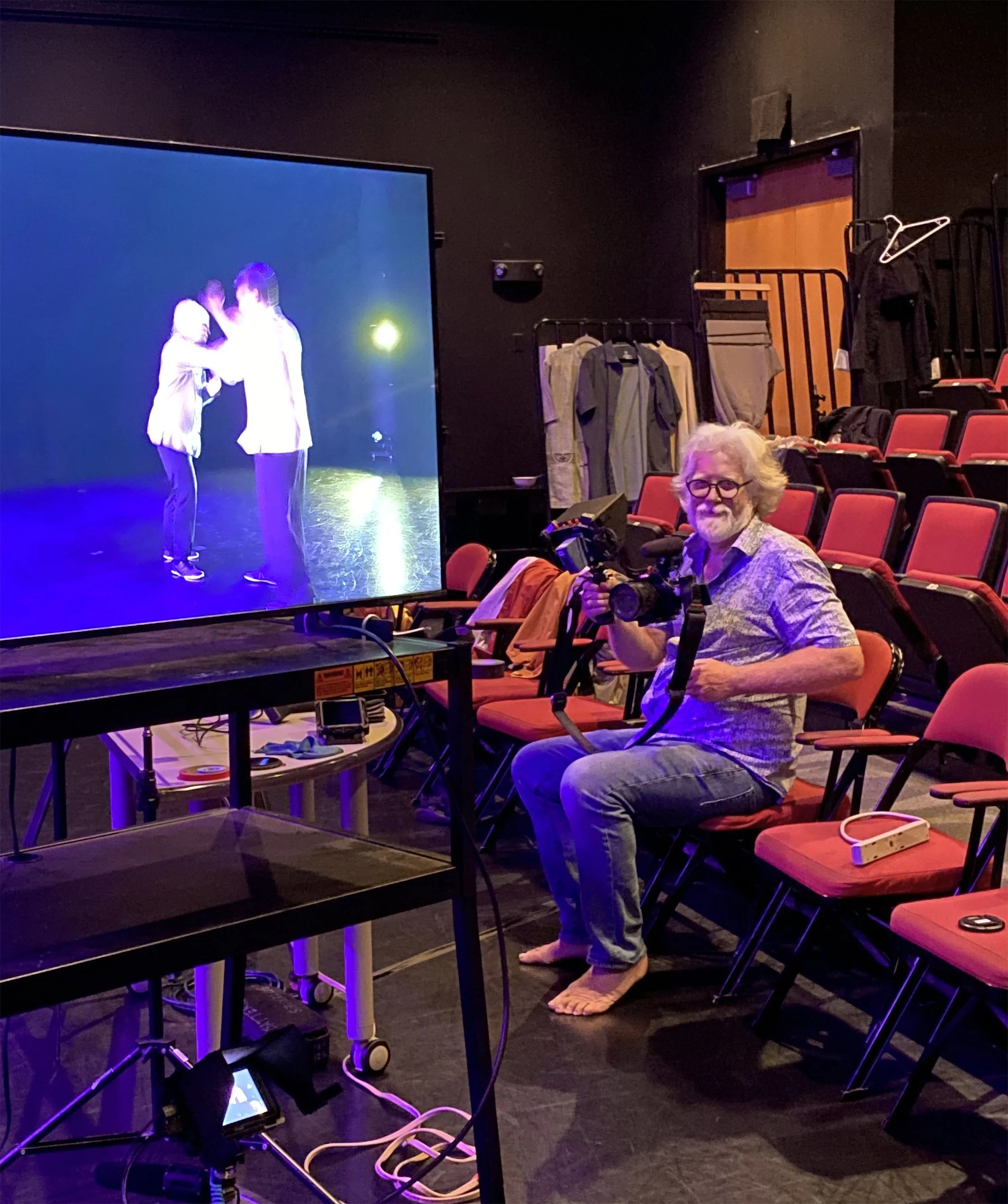
We began shooting around 9:00. Darren and Cully positioned themselves near the wings with handheld cameras, while a third robotic camera glided back and forth along a rod fixed to a table in front of the first row of seats. From the booth behind the top row of seats, Mike controlled the color, intensity, and texture of lights from stage left, stage right, and overhead. It took a few walk-throughs for Darren and Cully to figure out how to stay out of each other’s sight lines, while Sifu Paul and I adjusted our footwork to the boundaries of the lighting field and our gazes to the illumination.
We started with Symmetry 7, in which the partners move in a straight line and make only four 90-degree angle changes. This relatively simple movement pattern let the crew get a good feel for lighting and shooting the set and the performers a good chance to warm up. After the first few takes, Darren and Cully connected their digital cameras to a large monitor so we could all review the footage for framing, lighting, performance precision, and pace. We made some adjustments, filmed a couple more takes plus close-ups of select techniques, and then did the same with Symmetry 8.
The shoot-and-review process was instructive and fruitful, but it was slow. By 11:30, we had completed only the first two Symmetries, and I began to worry that at this rate, we might be working until midnight. But T’ai Chi teaches us not to rush, so I took a deep breath and settled in.
Cloud Hands
Having found our groove with Symmetries 7 and 8, we tackled the showpiece: the whole Linked Form. Darren had seen the form before, when we did a test session, and had a big-picture notion of how it moved within the space and how much time it took. Knowing that this was the main event of the day, he budgeted two hours for it.
We completed several satisfactory takes in less than an hour. The Linked Form was the first one Sifu Paul created, and he debuted it at the studio’s Chinese New Year demonstration in 2012 (with me in the partner role). So after nearly 15 years of fine-tuning, we were able to perform it as a slow, smooth, soft, sensitive T’ai Chi dance. Master Liang, Sifu Paul’s teacher and an avid ballroom dancer, prized martial arts that were both practical and beautiful, and the Linked Form is exactly those things.
Our first round of filming felt like one of the best rounds of that form I had ever done—and the next two were even better. In those timeless intervals, I felt I reached my highest attainments as a T’ai Chi practitioner.
Since we were on a roll, we decided to squeeze in Symmetry 6 before lunch.
Are you familiar with the saying “Pride comes before a fall?”
Turn and Kick—If You Can
No one actually fell, but we came close.
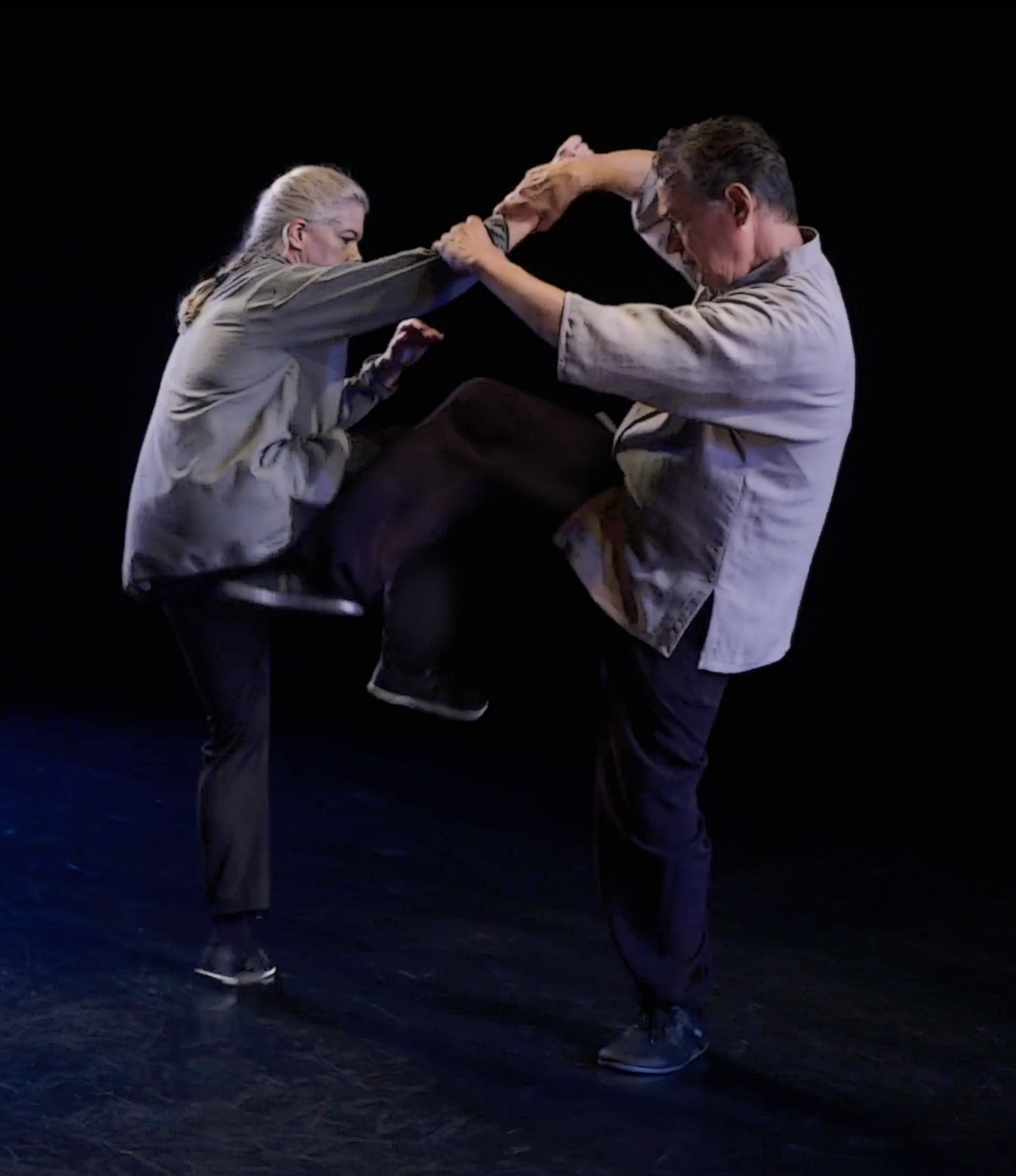
Symmetry 6 includes Kick With Sole, which appears in the Linked Form and the Symmetries as a 360-degree spin followed by a kick. On the smooth hardwood floor of our studio, it’s relatively easy to execute a tight, balanced spin. However, the combination of the marley floor, our rubber-soled shoes, and rainy-day humidity caused our feet to stick to the floor. With our rotation stuttering or stopping altogether, we bobbled one repetition after another. We attempted take after take, growing more frustrated and more fatigued with each unsuccessful effort.
We decided to break for lunch to fill our tanks and clear our minds. As we visited over sandwiches, videographer Cully hatched the idea of applying gaffer’s tape, the electrician’s equivalent of duct tape, to the bottoms of our shoes to reduce the friction. T’ai Chi teaches us to adapt and go with the flow, right? Cully doctored our soles, and we returned to work with optimism.
Repulse the Monkey
The tape did the trick. We got satisfactory footage of Symmetry 6 right away, and I couldn’t help noticing the irony that something sticky had helped us become unstuck. With minds and spirits settled, we approached the next challenge.
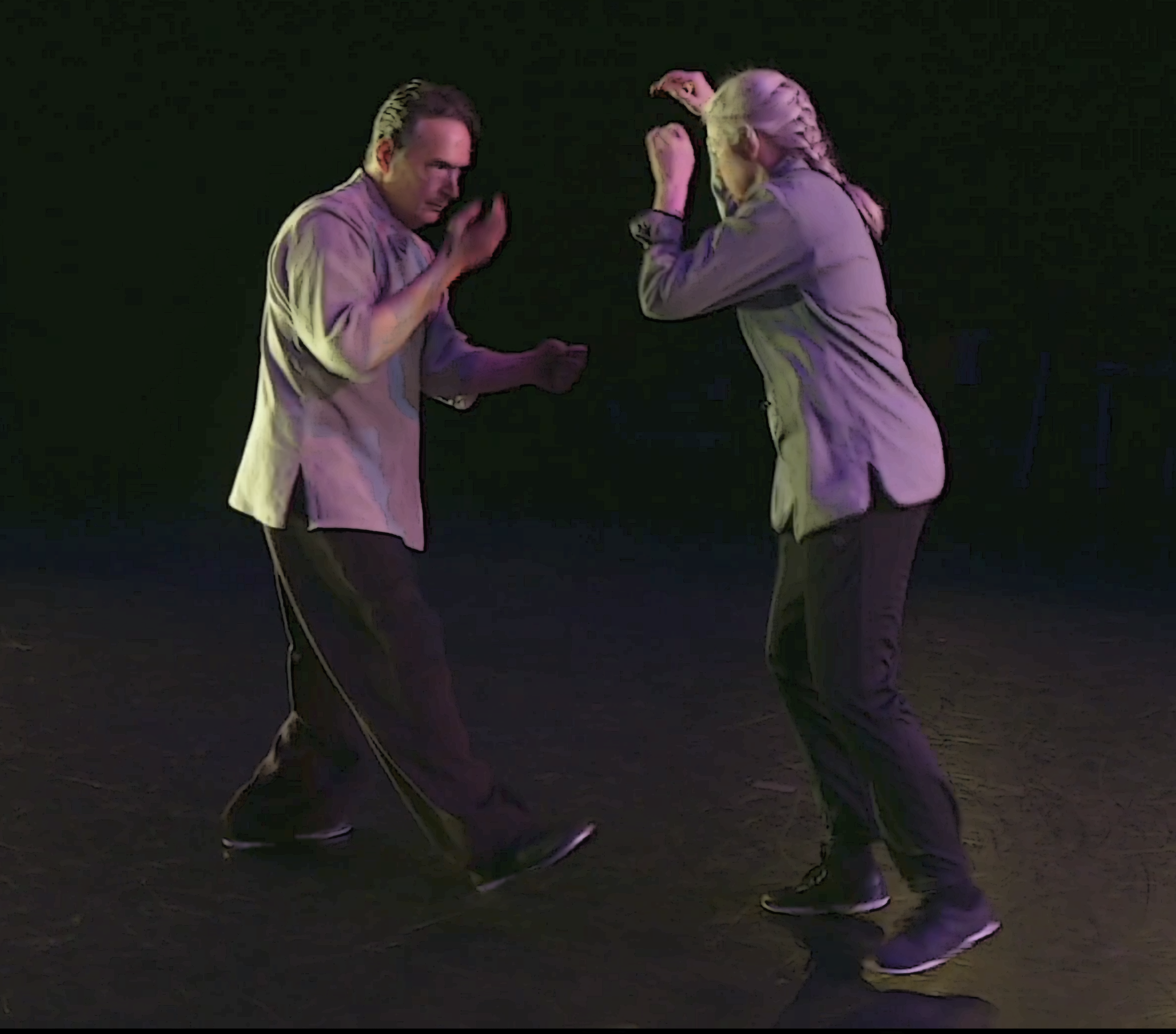
Symmetry 4 is the most complex of the lot. Via several angle changes and several throws, it rotates the partners 405 degrees. Eight times. The pattern is difficult for onlookers such as cameramen to track visually and equally difficult for performers to execute without becoming disoriented.
Sifu and I both found the latter to be especially true when the stage lights were so bright and the rest of the theater so dark that we could not see the seats in the house, meaning we lost our external reference points. After one take, we even started to head backstage instead of toward the audience area, which lay in the opposite direction, to find our water bottles. Fortunately, Mike noticed our confusion from the lighting booth and raised the work lights so we could find our way.
Sifu wisely scheduled #4 to be shot right after lunch, when we would all be rested and energized. Thanks to the months of preparation that enabled us to hit the right angles precisely, even without visible landmarks, we were able to shoot this most difficult Symmetry and its accompanying close-ups in just a few takes.
Step Forward to the Seven Stars
With the beast of Symmetry 4 behind us, it was all downhill from there—a decline in difficulty but certainly not in execution. Everyone’s energy was keenly focused, and we completed Symmetries 5, 3, 2, and 1 before 5:00.
It was interesting to note that by this point in the day, Darren and Cully had begun to move like T’ai Chi players too. After hours of watching and following Sifu and me with their cameras, they were taking slow, smooth, empty steps and sinking and rising smoothly to capture as many angles as possible. The boisterous banter of the morning settled into easy communication that was somewhat subdued but no less playful. The effects of T’ai Chi don’t stop with the practitioner; they transform the audience too.
Cross Hands
Once the primary project of shooting the Linked Form and the Symmetries was complete, there was only one thing left to film: Sifu Paul’s Solo Form. Any fatigue he might have been feeling after 8 hours of near-constant motion fell away before the intense concentration the form fosters, and it was over almost before we knew it. After the final Cross Hands, the videographers stood silent for a long moment and then remarked that they had been so rapt that they nearly forgot to move with their cameras. They had felt truly drawn in by the stillness within the movements.
Conclusion
We all exhaled a deep, cleansing breath. The event we’d been working toward for months had ended. The long, exhausting, exhilarating day of filming was over, the big project complete. After exchanging warm handshakes with Darren, Cully, and Mike, Sifu Paul and I headed back to our cars. Although my mind was empty, my heart was full of pride in the art we produced and gratitude for the privilege of acting as Sifu’s partner. It was the best day’s work I have ever done.
Return to Source
The videos captured one day’s efforts, but the art itself remained alive: something lived, adjusted, transmitted, and renewed every time we return to our practice.
The next day, we were back at the studio, Sifu to teach and me to attend class. Following the intensity of Friday’s filming, we might have been forgiven for skipping our usual Saturday-afternoon practice. But we didn’t, because the cycle of T’ai Chi continues. After reviewing the previous day, we looked toward the future: upcoming events, new drills for the pushing hands class, and yes, even new dimensions to be added to the Symmetries. They might have been recorded, but that doesn’t mean they’re finished. There’s always something more to learn.